Sulfate-Free Shampoo: What It Means and How to Choose One
"Sulfate-free" is now printed on shampoo bottles everywhere, but very few labels explain what it means or why it matters. If you have ever finished a hair wash with a squeaky, tight-feeling scalp, the cleansing agents in your shampoo are a large part of the reason. Here is a plain-language guide to sulfates, the gentler alternatives, and how to choose a shampoo that cleans well without leaving your hair feeling stripped.
What are sulfates in shampoo?
Sulfates are a family of cleansing agents, or surfactants. The two most common in shampoos are sodium lauryl sulfate (SLS) and sodium laureth sulfate (SLES). They are effective and inexpensive and create a lot of foam, which is why they became standard in so many products.
The trade-off is that strong surfactants can remove more of the scalp's natural oils than many people need, especially if they wash often. Some people find that hair feels dry or rough after washing, and that the scalp feels tight.
What does "sulfate-free" actually mean?
A sulfate-free shampoo still contains cleansing agents. It just uses gentler ones. Common examples you will see on ingredient lists include:
- Sodium lauroyl sarcosinate: a mild cleanser derived from fatty acids and the amino acid sarcosine.
- Cocamidopropyl betaine: a gentle cleanser made from coconut oil, often used to soften other surfactants.
- Decyl glucoside: a mild cleanser made from plant sugars and fatty alcohols.
These ingredients still clean hair and scalp effectively; they simply tend to feel kinder in everyday use. Sulfate-free shampoos often foam a little less. Less foam does not mean less cleaning.
What else to look for on the label
- Paraben-free: many people prefer shampoos preserved without parabens.
- Conditioning ingredients: humectants such as glycerine help hair feel cared for after washing.
- Botanical extracts: herbal ingredients give the formula its Ayurvedic character and fragrance.
- Pack size and price per wash: a larger bottle of a gentle shampoo is often the better value for daily use.
Our sulfate-free shampoos
Sprouting Shampoo
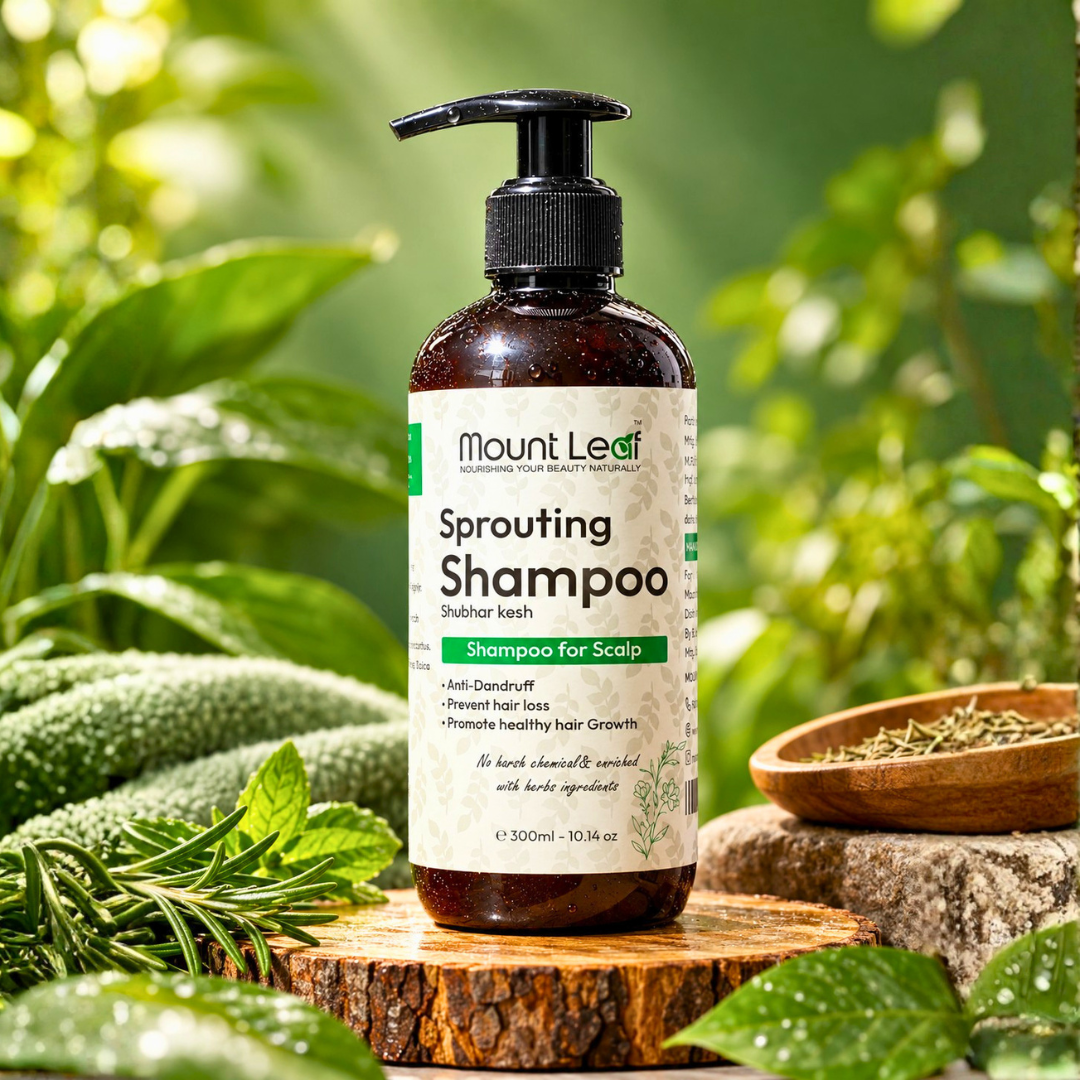
Mountleaf Sprouting Shampoo is a sulfate-free, paraben-free hair cleanser. Its formulation includes glycerine, sodium lauroyl sarcosinate, cocamidopropyl betaine, decyl glucoside and propylene glycol. It helps maintain scalp cleanliness, helps improve hair texture and nourishes hair strands. It comes in a 300 ml pack.
Velvet Touch Hemp Shampoo
Velvet Touch Hemp Shampoo is our conditioning-focused option, with hemp seed oil, argan seed oil and botanical extracts. It is designed for hair that needs extra smoothness and frizz control. Pair it with Velvet Touch Hair Hemp Conditioner.
How to wash your hair properly
- Wet hair thoroughly. Fully soaked hair spreads shampoo more evenly, so you use less.
- Lather in your palms first. Then apply to the scalp, not the lengths.
- Massage the scalp with fingertips. One to two minutes. The rinse water will clean your lengths.
- Rinse thoroughly. Leftover shampoo can make hair feel dull and heavy.
- Shampoo twice after oiling. The first wash lifts the oil; the second actually cleans.
- Condition the lengths. Especially if your hair is long, coloured or prone to frizz.
Frequently asked questions
Does sulfate-free shampoo clean hair properly?
Yes. Mild surfactants still remove dirt, sweat and everyday build-up. If you have used heavy oils or styling products, shampoo twice.
Why does my sulfate-free shampoo foam less?
Gentler surfactants usually create less foam. Foam is not a measure of cleaning power.
How often should I wash my hair?
It depends on your scalp, hair type and lifestyle. Two to three times a week suits many people. Wash more often if you sweat a lot or your scalp feels oily.
Can I use a sulfate-free shampoo after hair oiling?
Yes. Apply it to dry, oiled hair first and massage before adding water. This removes oil far more easily.
This article is for general information. Always follow the directions on your product label and do a patch test before first use.